Costa Rica’s beach-jungle promise—and the catch
I realized the “beach in the morning, rainforest by lunch” version of Costa Rica mostly exists on brochures—and it’s the first planning trap for a 7–10 day trip. The country is compact on a map, but the roads aren’t fast, and what looks like a casual hop can quietly eat half a day once you factor in mountain routes, rain slowdowns, and the fact that many best beaches and lodges sit at the end of bumpy side roads.
The promise is still real: you can absolutely pair a warm-water beach with real jungle wildlife and feel like you got two trips in one. The catch is that you usually have to choose what “jungle” means (volcano forest, cloud forest, deep rainforest) and accept that you won’t collect every highlight without trading away downtime. If you try to stack three regions plus “a quick night” somewhere in between, you’ll spend more money on transport and more hours staring out a van window than you expect.
The simplest way to keep it honest is to pick two solid bases (maybe a third only if one is a true stopover), then protect your travel days like they’re activities. When you plan for slower movement, tours and wildlife sightings actually feel like the reward—not something you’re racing the clock to reach.
Pick your coast: Pacific variety vs Caribbean vibe

On my first Costa Rica draft itinerary, I tried to “sample” both coasts—until I looked at the drive times and realized I was basically scheduling two long transfer days just to prove a point. For 7–10 days, picking one coastline isn’t settling; it’s how you buy back actual beach hours (and energy) instead of arriving at sunset with salt still in your hair and your day already gone.
The Pacific is the easier default if you want options: more beach towns to choose from, more tour infrastructure, and generally more flexibility if you’re deciding between renting a car and using shuttles. The catch is that the most popular stretches (especially around Manuel Antonio and some Guanacaste hubs) can feel busy fast—parking, restaurant waits, and “we should’ve booked that tour yesterday” energy. It’s great if you like having choices, less great if your idea of a win is an empty beach at golden hour.
The Caribbean side (think Puerto Viejo area) feels looser and more lived-in—later mornings, bike rides, reggae drifting from somewhere you can’t see. It can also be a little less plug-and-play: fewer direct routes, fewer “one-click” day tours, and weather that doesn’t always follow the same dry-season script as the Pacific. If your priority is vibe over variety, it rewards you; if you need tight logistics, it asks more patience.
Choose your jungle: rainforests, cloud forests, wildlife hubs
I got stuck at the “Arenal or Monteverde?” fork longer than I expected, because they both look like “jungle” in photos—but they feel different on the ground, and that matters when you only have a week. Arenal (La Fortuna) is the easier yes if you want a rainforest-meets-volcano base with reliable activities close together: hot springs on a tired day, hanging bridges, a waterfall, guided night walks. It’s also more built up, so if you’re craving quiet, you’ll need to choose your lodging carefully or you’ll hear tour buses before you hear birds.
Monteverde is the moodier alternative: cooler air, cloud forest, and that damp, mossy feeling like the whole place is exhaling. The win is the hiking and canopy-level wildlife; the friction is getting there—roads can be slow, and in rainy stretches they’re not the place you want to “wing it” after dark. It’s the better pick if you’re okay trading pool time for sweaters and early mornings.
If your dream is peak wildlife (tapirs, scarlet macaws, big rainforest energy), the Osa Peninsula/Corcovado zone is the heavy hitter—but it’s rarely a casual add-on. It costs more, takes longer to reach, and rewards you most when you commit at least two nights, which can crowd out beach days elsewhere. Manuel Antonio sits at the opposite end: easy access and high sighting odds, but the crowds can make it feel more like a timed entry than a wilderness day.
Best pairings: beach towns with easy jungle access
I kept wanting a “one beach, one jungle” itinerary that didn’t require heroic travel days, and the pairing that actually behaves is La Fortuna (Arenal) plus a Central Pacific beach base. From La Fortuna, you can stack rainforest hikes, a night walk, and hot springs without spending half your day commuting; then you slide to the coast for salt-water recovery. The catch is that the Central Pacific’s convenience attracts people—if you pick Manuel Antonio, you’re accepting timed entries, higher prices, and a more scheduled feel in exchange for seeing sloths without a multi-day trek.
If you want the Pacific but don’t want Manuel Antonio’s density, consider pairing Arenal with the southern Nicoya Peninsula (Santa Teresa/Montezuma area). It’s a surf-and-sunset kind of coast with a slightly scrappier edge, but the logistics aren’t as clean: the Arenal-to-Nicoya transfer can be long, and the last-mile roads can be rough enough that arriving before dark becomes part of the plan, not a nice-to-have.
The Caribbean version that stays realistic is Puerto Viejo plus a rainforest buffer like Cahuita or Gandoca-Manzanillo (or even an organized day into deeper forest). You get beach time and wildlife without crisscrossing the country, but you’re trading away the “big volcano” look and some tour convenience—rain can roll in even when the Pacific is posting perfect-blue photos, and you’ll feel it if you’re counting on a tightly timed activity schedule.
When to go: weather windows and trade-offs
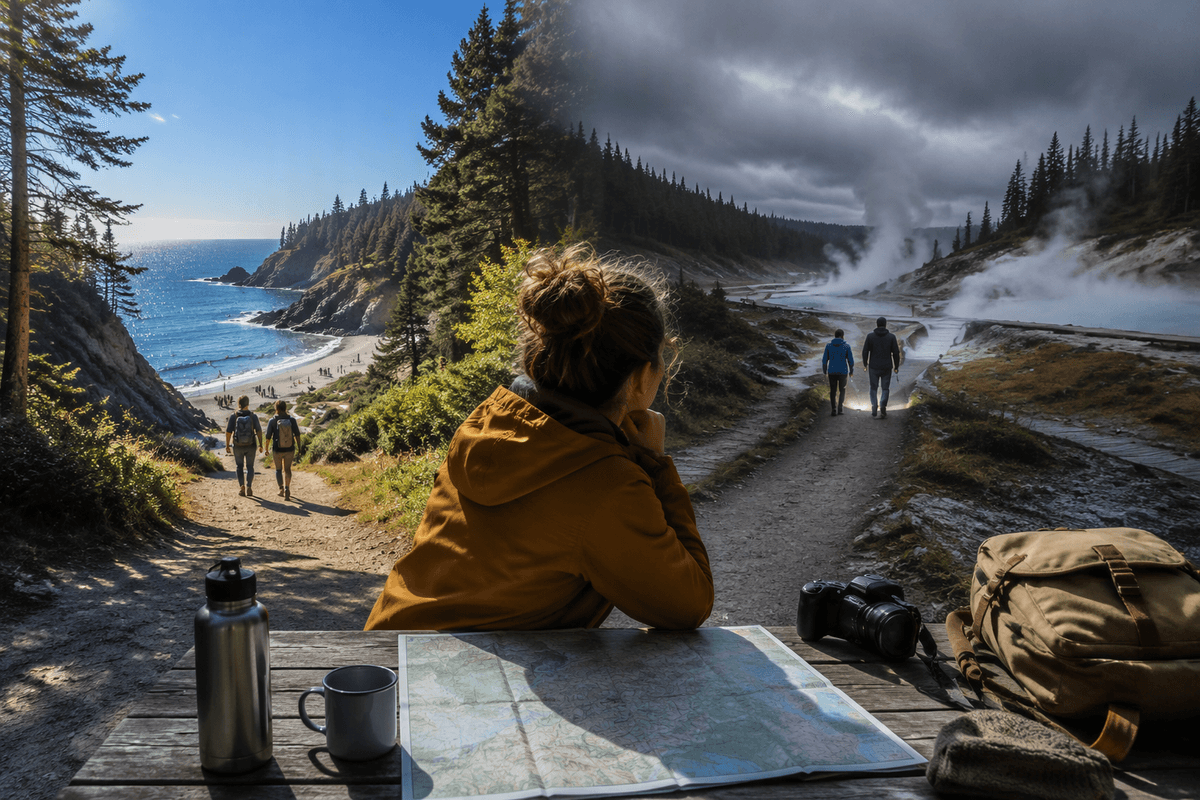
The first time I tried to pick dates, I kept defaulting to “dry season, obviously”—until I priced flights and realized I was also buying peak crowds. Roughly December through April is the clearest-weather window on much of the Pacific side, which makes it easier to stack hikes, boat tours, and beach days without constantly rescheduling. The friction is that it’s also the busiest: popular parks sell out timed entries sooner, hotel rates jump, and “we’ll decide tomorrow” starts to fail—especially around Christmas/New Year and spring break.
May through November (the green season) is where Costa Rica starts feeling less queued-up, and the rainforest looks like what you imagined in the first place. You’ll often get sunny mornings and then afternoon downpours, which can work beautifully if you front-load outdoor tours early and keep afternoons flexible. But if you only have 7–10 days, a couple of washed-out afternoons can make your itinerary feel thinner fast—river levels, visibility, and rougher roads can all change what’s possible.
The Caribbean side plays by different rules, which is great if you’re trying to dodge the Pacific’s peak-season squeeze. It can still be rainy when the Pacific is “perfect,” and then flip the script in early fall when the Caribbean can be surprisingly pleasant. If your dates are fixed, pick regions that don’t require flawless weather to be fun (hot springs, night walks, wildlife guides) so a gray day doesn’t turn into a lost day.
Make it smooth: transport, budget, safety, etiquette
The moment I stopped trying to “optimize” Costa Rica was the moment my plan got easier: I picked transfers I could finish before dark, even if it meant paying a little more. Driving gives you freedom (and makes odd beach towns possible), but it also makes you the one dealing with foggy mountain switchbacks, surprise potholes, and that last hour where Google Maps gets a little too confident. Shared shuttles feel slower on paper, yet they’re oddly efficient for first-timers—someone else handles the route, and you arrive less wrung out, which matters if you’re only here 7–10 days.
Budget-wise, Costa Rica punishes “many small moves.” A third base often costs you twice: another transfer day plus another round of tours you now have to squeeze into shorter windows. If you’re mid-range, spend where time buys experience—one guided wildlife walk in a national park can beat three self-guided loops where you don’t spot much—and save on the stuff that doesn’t change the outcome (simple sodas, fewer “must-try” cocktails in resort zones).
Safety and etiquette are mostly about not forcing the schedule. Night driving is where little issues become big ones, so treat “arrive by sunset” like a rule, not a preference. In parks and on beaches, you’ll see how quickly wildlife gets crowded; keep distance, skip flash at night walks, and don’t bargain like you’re at a flea market—Costa Rica isn’t cheap, and the people running tours and shuttles are often the reason your tight itinerary actually works.
Your ideal balance: slow, wild, or luxe—decide confidently
If you’re here 7–10 days, pick a trip personality first, then let it police your itinerary. “Slow” means two bases, a true rest day, and tours only in the mornings—great if you’re a couple that wants beach time to actually feel like vacation, but you’ll skip the far-flung wildlife flex.
“Wild” is committing to early alarms and at least one guided cornerstone day (cloud forest or a big rainforest park), plus one beach base that’s close enough to reach without gambling on night driving. It’s not always cheaper—good guides cost money—but it’s how sightings stop being luck. “Luxe” isn’t just nicer hotels; it’s buying back time with shorter transfers, private shuttles, or a one-way flight when it prevents a day from dissolving on the road. Whichever you choose, keep one floating half-day for weather or fatigue—Costa Rica almost always claims it anyway.