Why “best time” feels simple, but isn’t
It’s easy to think there must be one “right” time to eat corn—until you notice the same food can land differently on different days. One afternoon, a corn tortilla alongside eggs feels steady. Another day, a bowl of sweet corn by itself turns into that familiar arc: a quick lift, then a sleepy dip, plus a little pressure in the belly that hangs around longer than expected.
That’s why the “best time” question tends to disappoint. Corn isn’t just corn in your body; it’s a mix of starch, fiber, and (in sweeter varieties) more sugar, and the way it’s prepared changes how fast it moves. Grinding it into chips or tortillas, popping it, or eating it as whole kernels can shift the workload for digestion. Add the reality that appetite, stress, sleep, and activity level aren’t consistent, and timing becomes less of a rule and more of a pattern you learn to read.
Corn’s digestion workload depends on its form
You can feel the difference before you can explain it: a few spoonfuls of corn salsa sit lightly, but a bigger serving of tortilla chips can feel like it “parks” in your stomach. That’s partly because corn’s starch isn’t packaged the same way across forms. Whole kernels come with intact fiber and a physical structure that takes more chewing and more work to break down, so the rise-and-fall in energy may feel slower—though the skins can also linger and add to that bloated, gassy pressure in some people.
Once corn is milled into flour for tortillas, chips, or cornbread, the starch is more exposed and tends to digest faster, especially when the portion creeps up. Popcorn sits in an awkward middle: it’s airy, but the hulls can be irritating, and it’s easy to eat a lot without noticing. Canned or creamed corn can feel “easier,” yet it may also land sweeter and quicker, depending on what else is on the plate.
Blood sugar impact shifts with meal pairing
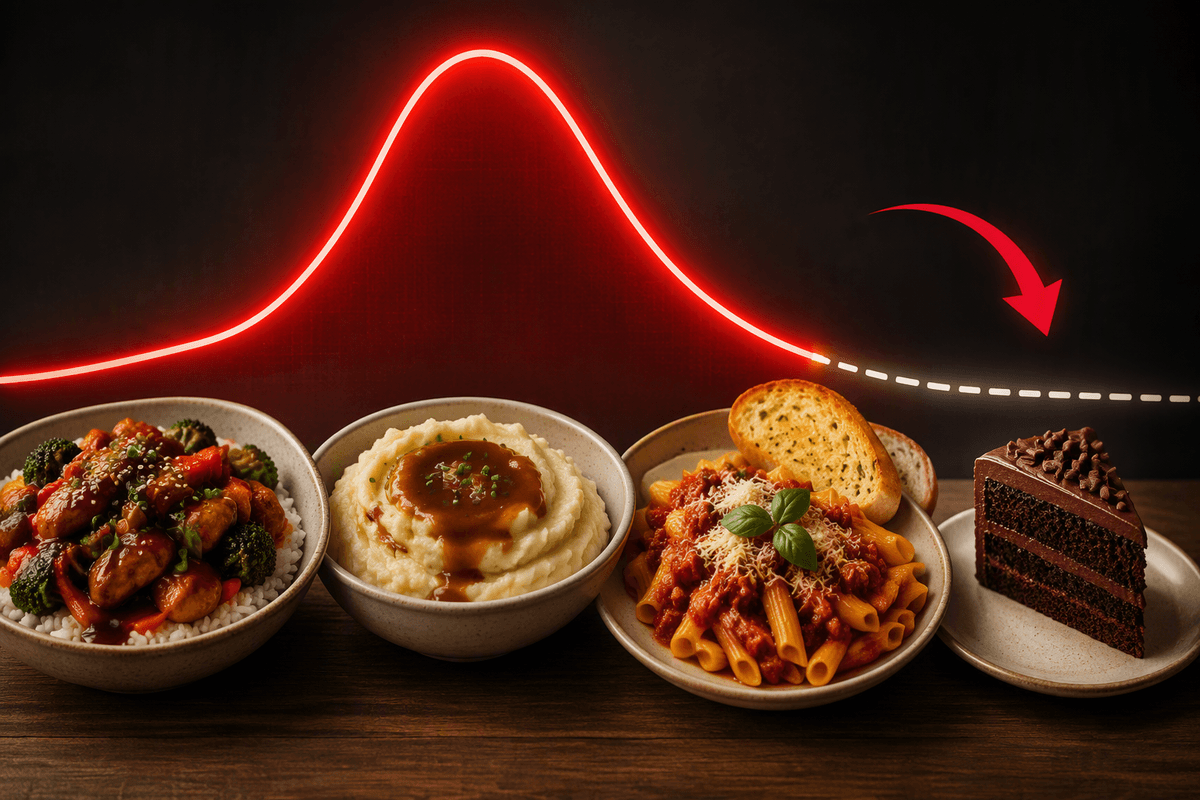
Sometimes the weird part isn’t the corn—it’s what’s missing next to it. A small bowl of sweet corn eaten on its own can hit like a quick “clean” carb: you feel a lift, then an hour later you’re scanning for something else, a little foggy or suddenly snacky. Put that same corn into a meal with eggs, chicken, beans, or avocado, and the curve often feels flatter—less buzzy at first, less of that sudden drop.
The pairing changes the pace. Protein and fat tend to slow how quickly the stomach empties, and extra fiber from vegetables or legumes can make the starch feel less abrupt. But it isn’t perfectly predictable: tortillas with a sugary drink may still feel like a spike, and popcorn “counts” differently when it’s basically a salty, easy-to-overeat pile. If you notice that corn feels fine in a mixed meal but rough when it’s the main event, that’s a useful clue—not a personal failure.
Earlier meals often tolerate corn more smoothly

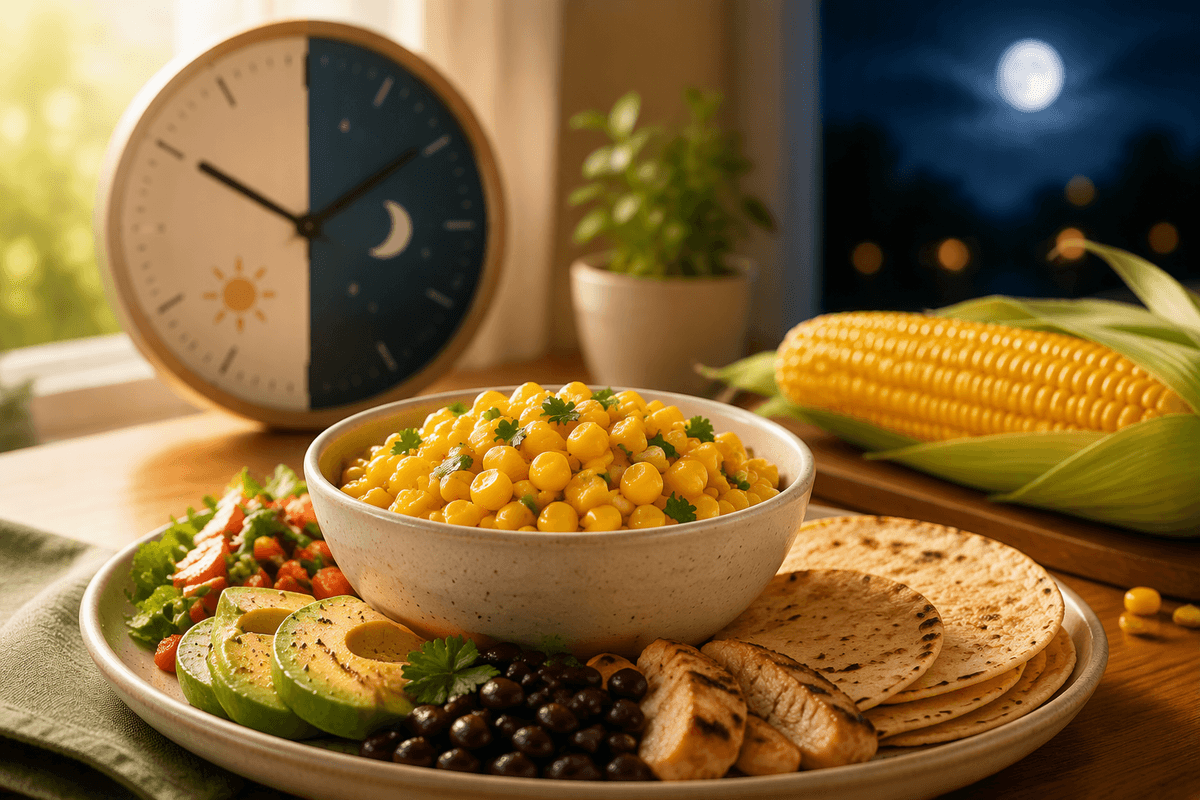
By midday, the same corn that felt “too much” at night can seem almost unremarkable. A couple tortillas at breakfast with eggs, or a scoop of corn tucked into a lunch bowl, may digest with less drama—less of that tight, expanding belly feeling and fewer sharp swings between energized and wiped out. People often chalk this up to willpower or “metabolism,” but it can be simpler than that: earlier in the day you’re usually moving more, sipping more fluids, and stacking food in a way that gives starch somewhere to go.
There’s also a practical rhythm to it. When corn shows up earlier, it’s more likely to be part of a full plate—protein, vegetables, maybe some fat—rather than a stand-alone snack. That doesn’t guarantee a smooth ride; stress, sleep debt, and portion creep still matter. But if corn is going to feel predictable, it often starts with the meals where your body already has momentum.
Evening corn can feel fine—or surprisingly rough
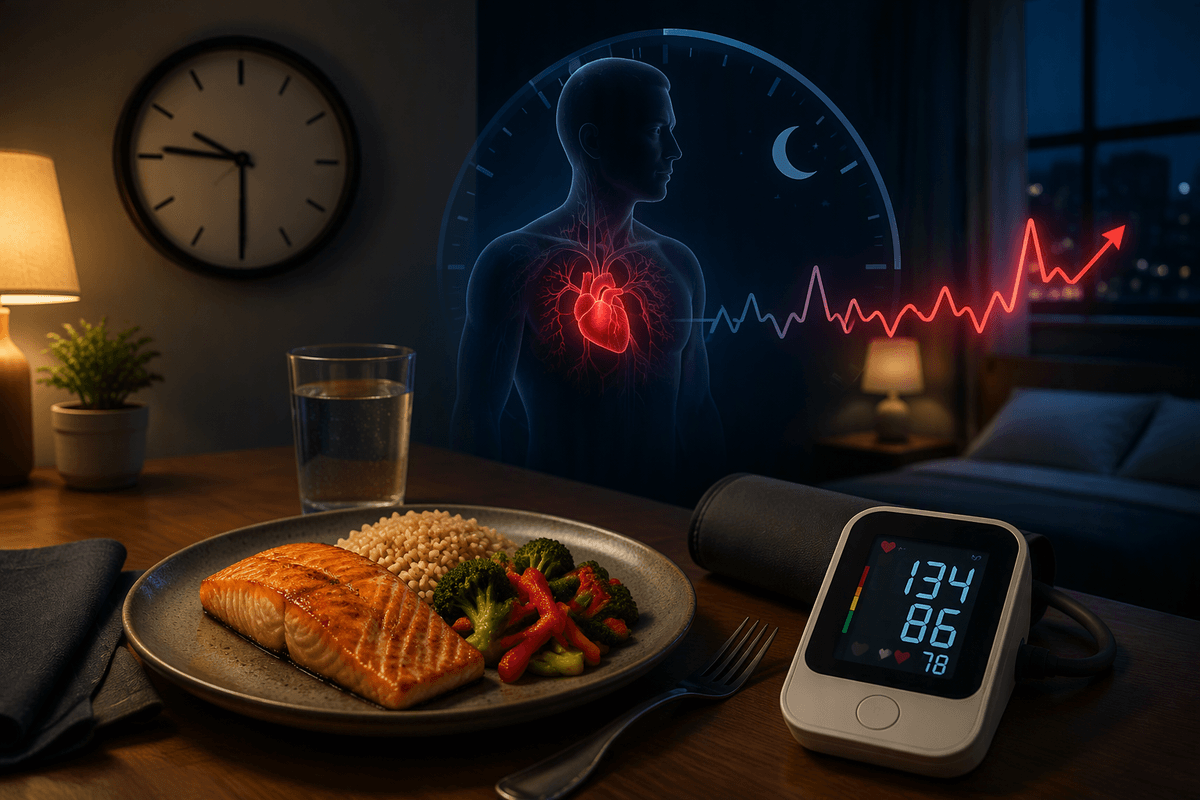
At night, the first sign can be subtle: you finish dinner and feel fine, then notice your waistband getting tighter during the dishes, or you wake up a little thirstier and heavier than you expected. Evening corn can be oddly split this way—sometimes it lands normally, and other times it turns into a slow, stubborn fullness that doesn’t match the portion. If the meal is quieter and you’re already winding down, there’s less movement to “carry” a starch-heavy side along, and the same kernels or tortillas may feel like they sit longer.
The other surprise is how quickly a late corn snack can change the rest of the night. Popcorn or a couple tortillas may seem light, but if they’re basically the main carb without much protein, fat, or fiber alongside, the energy lift can feel brief—and the drop can show up as restlessness, extra snacking, or that hollow-hungry feeling that’s easy to misread as “still hungry.” It’s inconsistent on purpose: evening is where small differences in pairing and portion start to matter more.
Portion and texture decide the “sweet spot”
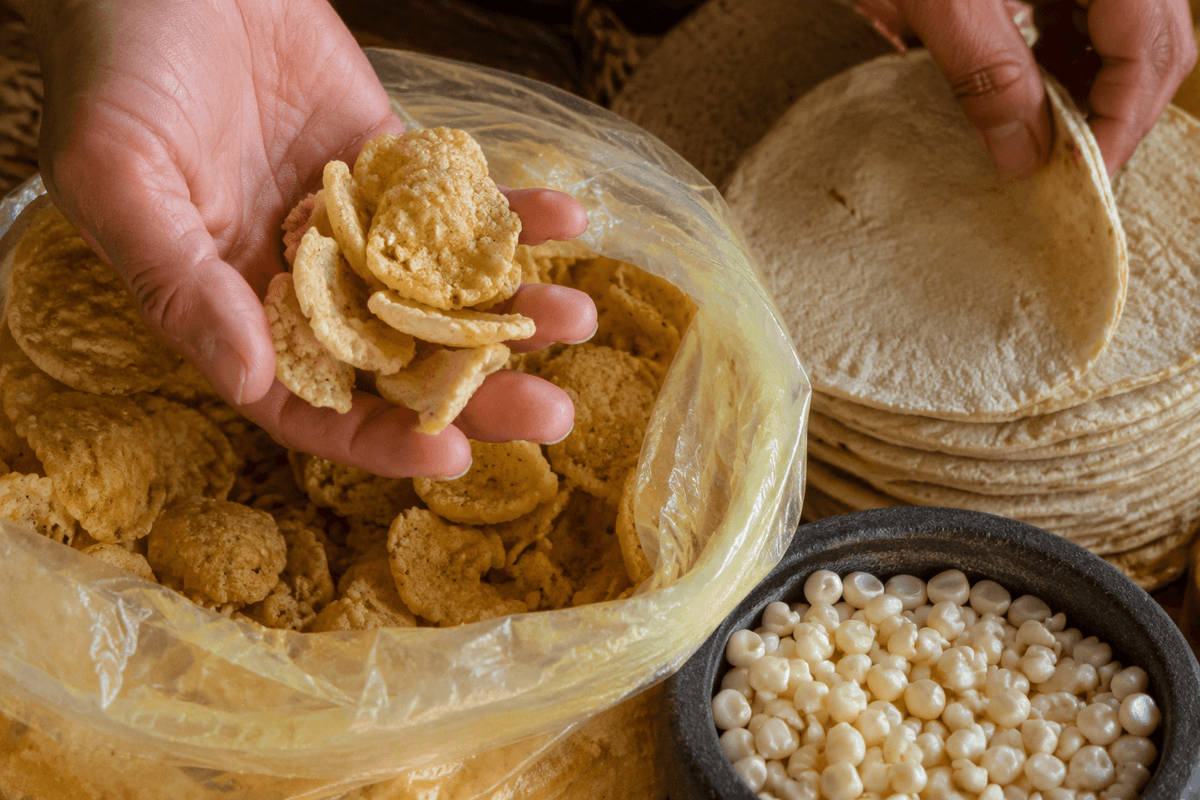
The tricky part is how “a normal amount” changes once corn is crunchy, airy, or ground. A small handful of chips can turn into half a bag before your stomach gets a vote, while a couple of tortillas can feel deceptively light until the meal is over and that dense fullness shows up. With whole kernels, the opposite can happen: the portion looks modest, but the skins and fiber may linger and make you feel puffy even when your energy stays fairly steady.
This is where the “sweet spot” is often less about the clock and more about texture plus dose. Finely milled or puffed corn tends to act faster and is easier to overshoot; intact kernels and chewy tortillas tend to feel slower but heavier. It’s not perfectly consistent—sleep, stress, and what else you ate still blur the line—but noticing which textures make portions creep can explain a lot of the crash-or-bloat pattern.
Finding your timing through predictable signals
It often shows up as a small mismatch: your stomach feels “fine,” but your focus starts slipping, or you get that quiet urge to keep grazing even though dinner wasn’t small. Those are the moments that make timing feel personal. If corn is followed by a noticeable dip—sleepiness, irritability, sudden snacking—it may be acting like a faster carb in that context, especially when it’s milled, popped, or eaten mostly on its own. If the main issue is pressure, gassiness, or a tight belly that builds slowly, the signal is different: the form and portion may be creating more digestive drag than a clear energy swing.
The clues don’t always arrive on schedule. Some people feel the “crash” within an hour; others feel discomfort later, or even the next morning. Still, patterns can be surprisingly consistent when you compare like with like: corn earlier with a mixed plate versus later as a stand-alone snack, a measured portion versus a “free-pour” bowl. Over time, you’re not hunting for a perfect hour—just the version of corn that leaves the fewest loose ends.