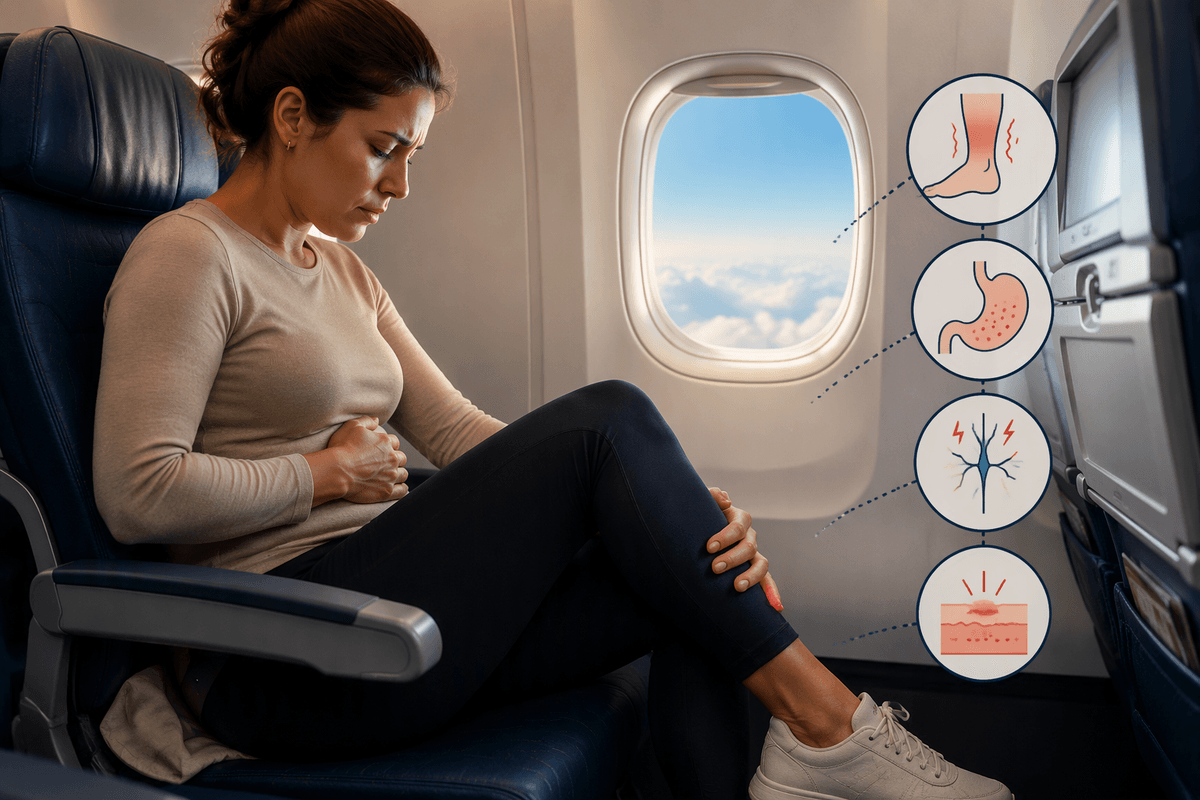
Why tight travel outfits feel harmless at first
At the gate, tight jeans or a smoothing layer can feel like a smart choice: everything stays in place, nothing bunches, and the pressure reads as “support” rather than “restriction.” Early in the flight, you’re also still shifting in your seat, stowing bags, turning to talk, getting up once or twice—small movements that quietly keep blood and fluid moving out of your calves. So the outfit passes its first test, and any squeeze around the waistband or thighs is easy to ignore.
Hours later, the math changes. Fabric that felt “snug but fine” while standing can press differently once your hips are folded and your abdomen is slightly compressed by the seated angle. Meanwhile, the longer you stay still, the more your legs tend to hold onto fluid, and tight seams can leave deeper marks or a faint pins-and-needles feeling. The discomfort often shows up after you’ve committed to the seat and can’t easily reset.
Cabin conditions that amplify pressure and swelling
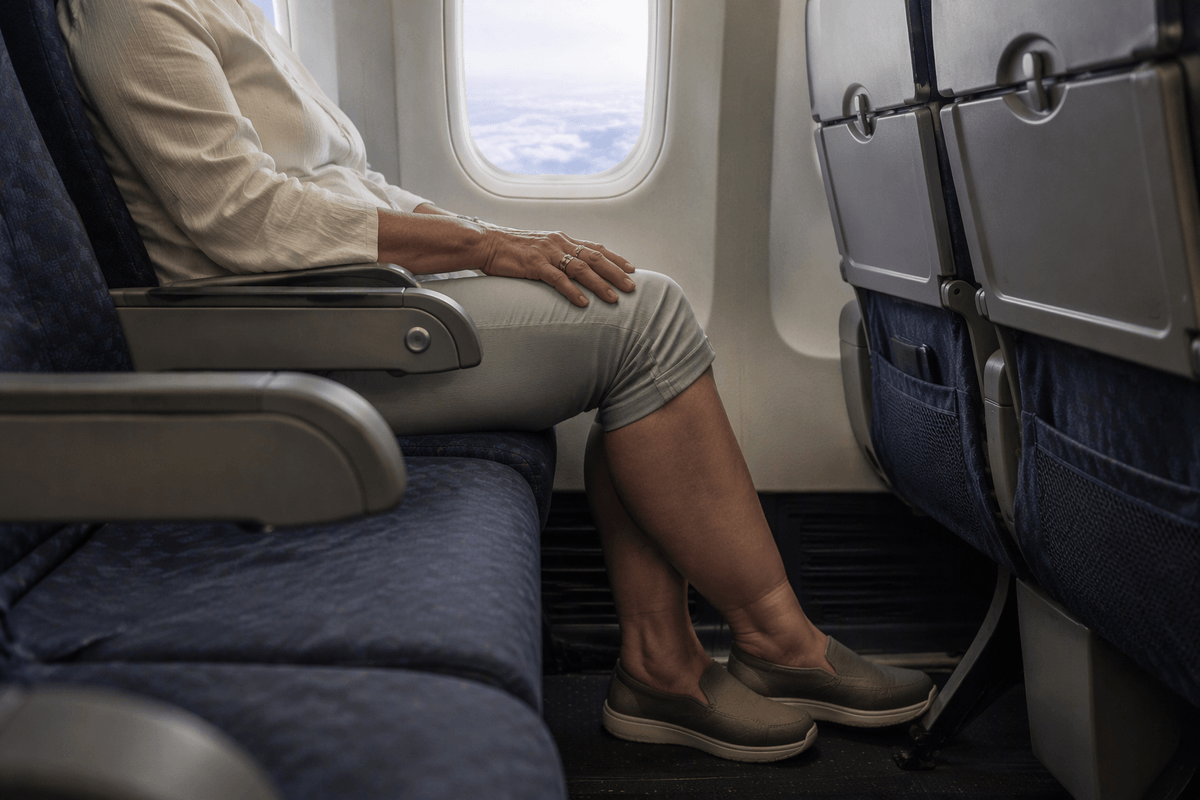
Somewhere over the middle of the route, you might notice your rings feel a touch tighter or your shoes don’t slip on as easily when you stand. That’s often when the cabin itself starts to “show up.” Air pressure in the plane is kept lower than at sea level, and the air is typically dry, so your body can drift toward mild dehydration without you feeling obviously thirsty. In that mix, blood return from the legs may slow a bit, and fluid can hang around in the ankles and calves longer than it would on the ground.
Add the seated angle and limited legroom, and the pressure pattern becomes uneven. The edge of a tight waistband can press more when your abdomen is folded, while snug thighs or shapewear may narrow the room your tissues have to expand as fluid shifts. It doesn’t always look dramatic—sometimes it’s just deeper sock grooves, a “full” lower-leg feeling, or intermittent tingling that comes and goes depending on how long you’ve stayed still.
Restricted circulation versus true clot risk
The first clue usually isn’t pain—it’s how “imprinted” you look when you finally stand. Deep waistband lines, a band of swelling above a tight sock, or a calf that feels heavy can make people worry they’ve cut off circulation. Often, what’s happening is less dramatic: sitting still slows the calf-muscle pump, and snug fabric creates a few high-pressure zones where fluid is more likely to pool. That can translate into temporary puffiness or tingling that eases after you move, even if the outfit still feels tight.
Clot risk is a different category, and it’s driven more by hours of immobility plus individual factors than by a single pair of leggings. Tight clothing can add to the “traffic jam” feeling—especially at the groin or behind the knee—but it doesn’t automatically mean something dangerous is forming. The sensations don’t map neatly: mild swelling can feel alarming, while more serious problems may start subtly. Paying attention to patterns—one leg changing more than the other, symptoms that don’t settle after walking—can be more informative than the seam marks alone.
Nerves and soft tissues react to sustained compression
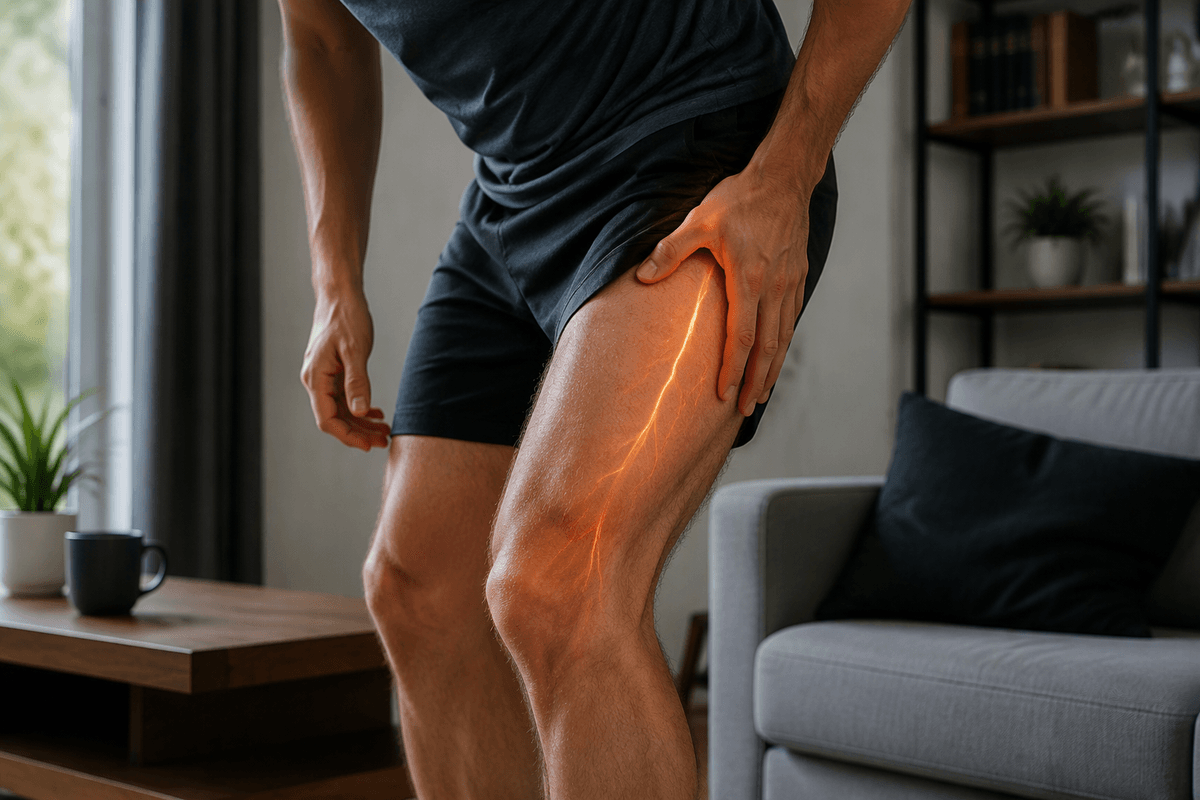
When you finally shift your weight and feel a quick spark of tingling down the thigh, it can be surprising—especially if your legs don’t look that swollen. That’s often the “nerves plus soft tissue” side of the equation, not just blood flow. A tight waistband, shapewear edge, or the thick seam of jeans can act like a small clamp once you’ve been folded at the hips for hours, pressing on superficial nerves that run close to the skin. The result may feel like numbness, pins-and-needles, or a patch of skin that’s oddly sensitive when fabric brushes it.
The same outfit might feel fine while you’re upright, then turn fussy only when your seat angle, pocket placement, and thigh position line up just wrong. And once tissue has been compressed for a while, it may stay “grumpy” for a bit—so even after you stand, the sensation doesn’t always reset instantly.
Bloating, reflux, and the waistband feedback loop
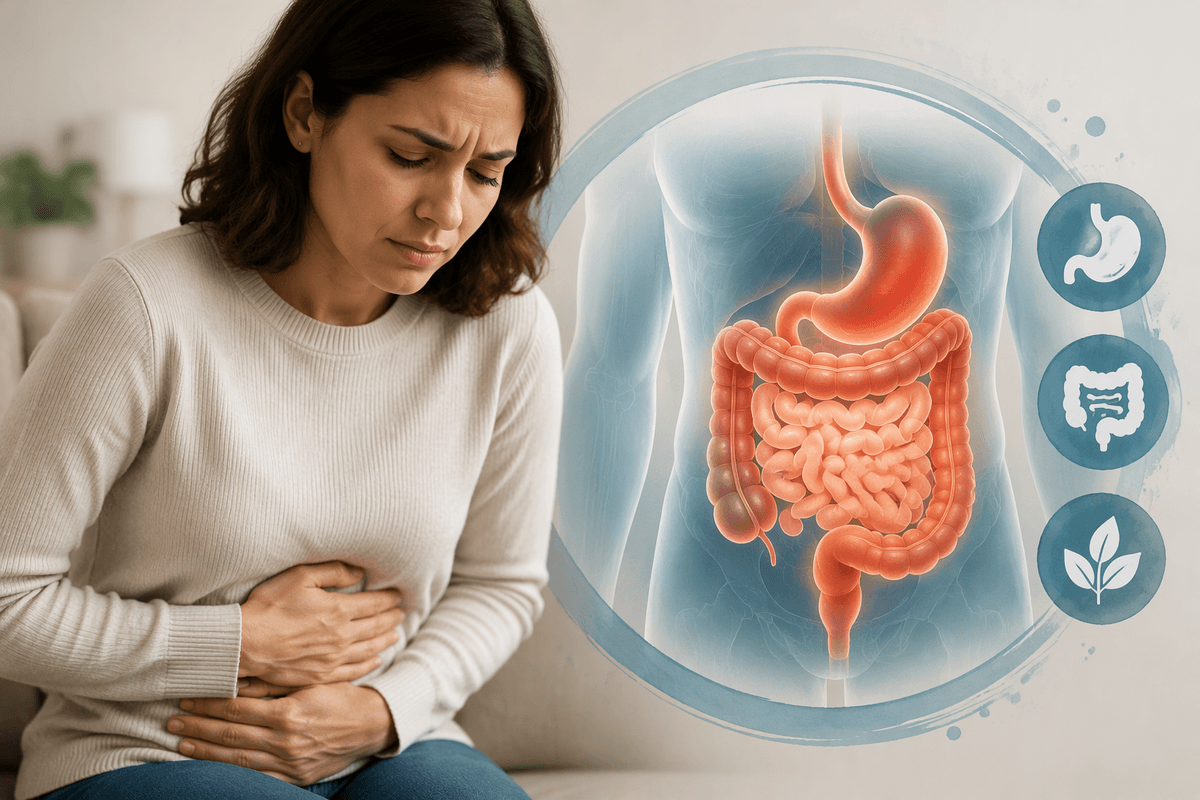
It often starts as a small, nagging pressure under the ribs—like you ate too quickly—then you realize you haven’t eaten much at all. In a cramped seat, your abdomen is already folded, and a firm waistband or shapewear panel can turn that bend into a constant squeeze. Gas tends to feel “stuck” when you can’t stretch or shift freely, and the pressure can push upward, making heartburn or a sour taste more noticeable even in people who don’t usually think about reflux.
The loop is frustrating because it feeds itself. When your middle feels tight, you may brace your core, breathe a little shallower, and stay still to avoid discomfort—exactly the posture that makes bloating feel worse and keeps pressure focused at the waistband. Then the jeans feel tighter, so you adjust again, sometimes trading temporary relief for more compression in a new spot. Over a long flight, that can become one of the clearest “this outfit isn’t working anymore” signals.
Skin, heat, and irritation in long-haul wear
By the time you’re halfway through a long-haul, the first “skin clue” is often simple: the fabric stops sliding. Dry cabin air can make skin feel tighter and less forgiving, and snug waistbands, shapewear edges, or thick seams start to rub the same small spots every time you shift. What looked like a clean line at the mirror can turn into a warm, itchy band, especially where sweat collects and can’t evaporate well—behind the knees, along the groin crease, under the waistband, and around sock tops.
Heat changes the review, too. When your body warms up in a cramped seat, tight materials trap moisture and increase friction, while denim or compressive panels can hold pressure in place even as tissues subtly swell. The result isn’t dramatic for everyone, but it’s annoyingly persistent: stinging when you stand, red marks that linger, or skin that feels “overstimulated” when the fabric brushes it—signals that the outfit’s compression is no longer just cosmetic.
Comfort trade-offs doctors consider for most flyers
When you finally stand to deplane, it can be oddly hard to tell what mattered most: the outfit, the seat, the cabin, or just the number of hours. That’s usually the frame clinicians use, too. For most healthy flyers, the main “risk lever” isn’t whether leggings are snug—it’s how little the legs moved while fluid was already drifting downward in a low-pressure, dry environment. Tight waistbands and compressive panels tend to be treated as amplifiers: they can make swelling feel sharper, turn a mild nerve pinch into numbness, or push bloating and heartburn into the foreground.
The compression can be calming in one area and aggravating in another. A gentle, evenly distributed squeeze may feel supportive, while a firm edge at the groin, behind the knee, or across the upper abdomen can create a few high-pressure choke points. In practice, the most “actionable” signals are the ones that don’t behave normally—one-sided swelling, symptoms that don’t settle after walking, or tingling that keeps returning as soon as you sit back down.