Why hard-boiled eggs feel unbeatable, until they don’t
It usually starts as a tiny win: you peel a hard-boiled egg one-handed in the parking lot, or between meetings, and it feels like you “beat” your hunger with almost no effort. The texture is predictable, the portion is built in, and the protein number is easy to remember. For a while, that simplicity can quiet the snack decision entirely—until the same simplicity begins to feel like a constraint.
The downsides tend to show up in small, inconsistent ways. Some days the smell feels awkward at a desk, or the rubbery whites land wrong after a workout. Other times it’s not about taste at all—you notice you’re hungry again sooner than expected, because an egg’s protein comes with relatively little fiber, and the fat/protein combo can sit differently depending on stress, timing, and what else you ate. If you keep reaching for eggs but still find yourself scanning for something crunchy or sweet later, that’s often the cue: the snack “works,” but it may not be covering the whole job anymore.
What makes a snack truly high-protein in practice
You can feel it when “high-protein” is mostly a label: you finish the snack, toss the wrapper, and an hour later you’re back at the vending machine pretending it’s about caffeine. In practice, the first check is simple but often overlooked—how many grams of protein you’re actually getting per serving you’ll realistically eat, not per container or “suggested” portion. A snack can look impressive on the front and still land in the single digits once you account for serving size.
The second check is how that protein behaves in your day. Protein that’s paired with some fiber or fat tends to hold steadier, while protein that’s mostly isolated (or paired with lots of sugar) can feel filling briefly, then fade fast. If you notice a specific pattern—mid-morning energy dips, cravings for crunch, or overeating at the next meal—it’s often less about willpower and more about the snack’s protein-to-volume balance and how processed it is.
Dairy-based options that mimic egg-like satiety
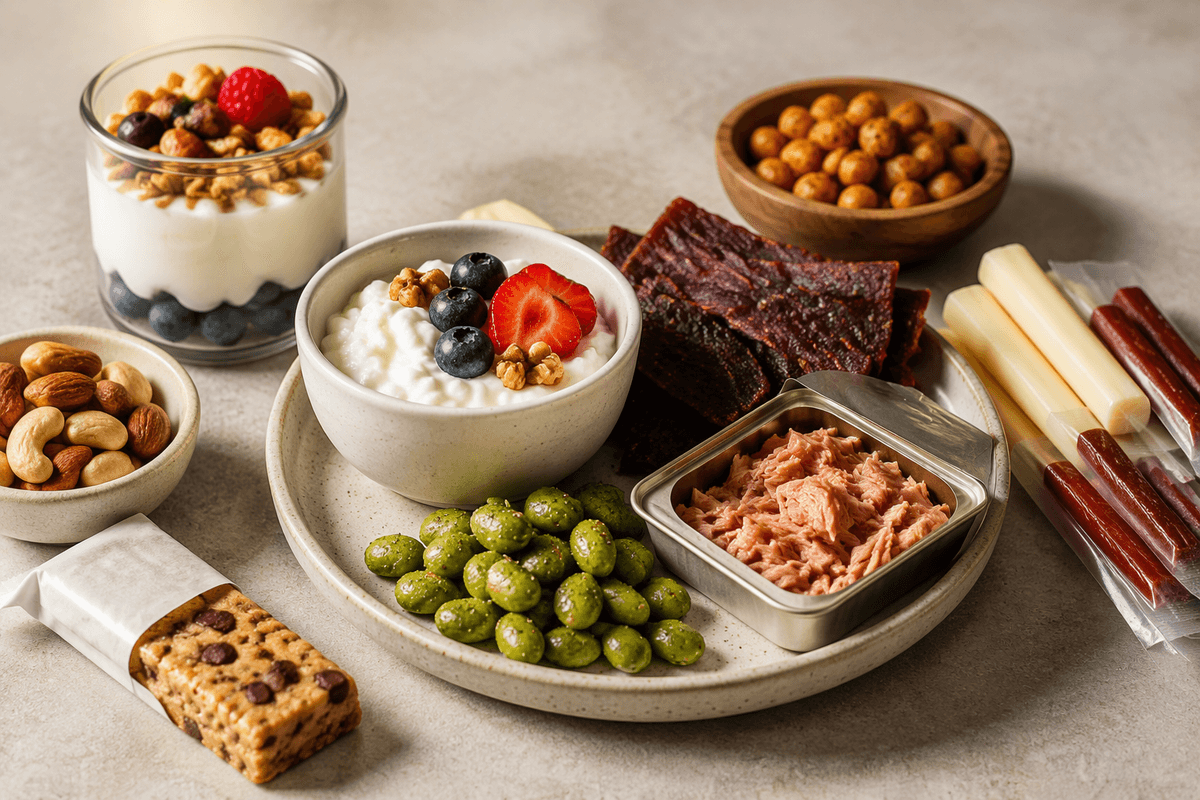
You notice it first when you’re rinsing out a little yogurt cup at the office sink: no lingering smell, no peeling, and somehow you’re not thinking about food again immediately. Dairy tends to “sit” more like eggs for a lot of people because it’s naturally protein-forward, often comes in single-serve packaging, and pairs easily with a bit of fat. Greek yogurt, skyr, and cottage cheese usually land in that 15–20+ grams per serving range when you choose the higher-protein versions, which is where the snack starts to feel like it actually replaces an egg habit instead of just decorating it.
The dairy can quietly drift into “dessert mode.” Flavored yogurts can bring more sugar than you expect, and the satiety can feel shorter when the cup is mostly sweet and thin. Plain options with berries, a spoon of nut butter, or a few high-fiber toppings often hold steadier—though they’re a little less grab-and-go and can be inconsistent if you’re sensitive to lactose or find cold dairy hard post-workout.
Meat and seafood snacks for savory protein cravings
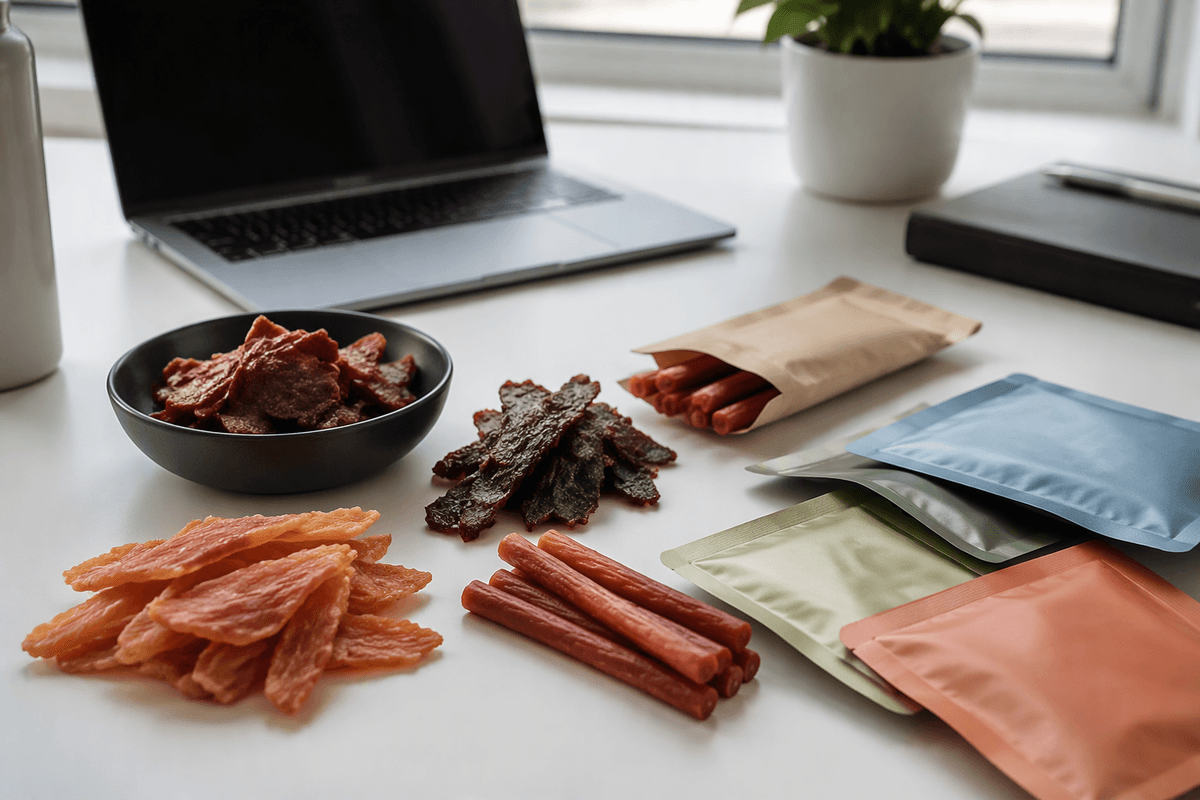
It’s usually a smell check that pushes you here: eggs feel socially risky at your desk, but you still want something salty and “real,” not another sweet cup. Meat and seafood snacks tend to hit that savory craving fast, and they’re often easier to eat mid-commute because there’s no spoon, no peeling, and fewer temperature worries. A small pack of turkey or chicken jerky can land around 10–15 grams of protein, while beef jerky, biltong, or meat sticks vary widely depending on portion size. Tuna or salmon pouches can push higher, but they’re louder in flavor and sometimes feel like a mini-meal, not a snack.
These options can be deceptively “high-protein” while also being high-sodium, and some include added sugar or fats that change how heavy they feel. If you notice you’re thirstier, a little puffy, or weirdly hungry later, it may not be the protein—it may be the salt, the chew factor, or that the snack didn’t bring any fiber along with it.
Plant-forward snacks that still hit protein goals
The shift usually happens in a small moment: you grab a “plant-based” snack expecting it to feel light, and then realize it either doesn’t touch your hunger—or it leaves you oddly heavy. Plant-forward protein can work, but it tends to be more sensitive to portion size and pairing. Roasted edamame, dry-roasted soybeans, and lentil-based crunchy snacks can land in the 10–15 gram range in a realistic handful, and they bring fiber that eggs don’t. That fiber is often why the fullness feels steadier, especially during long meetings or a commute.
The plant protein rarely behaves like a clean swap. Hummus cups with pretzels can look “high-protein” but end up mostly starch unless the serving is generous. Nut packs feel substantial, yet the protein-to-calorie ratio is lower than most people assume, so the “satiety” may be more about fat than protein. If you keep needing a second snack later, it’s often not willpower—it’s that the plant option was under-dosed or carb-heavy for the moment you used it.
Shelf-stable picks that seem smart, but surprise you
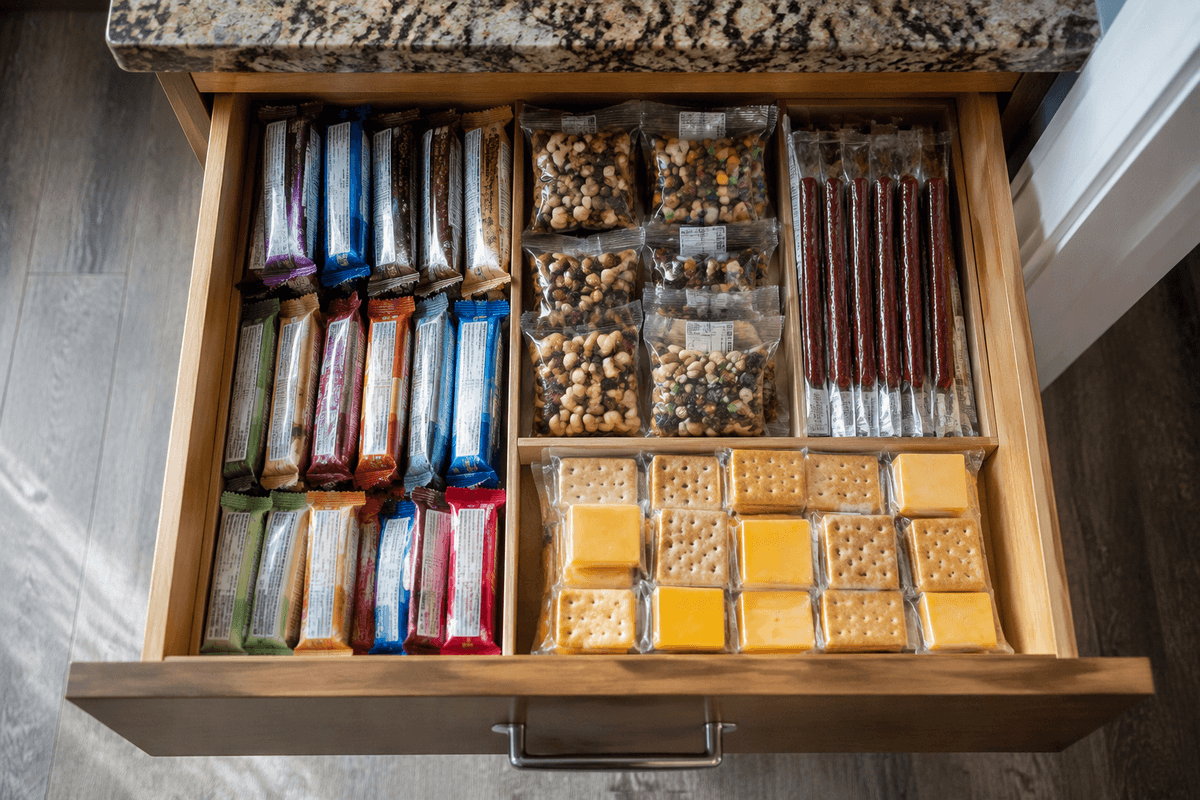
You notice the “prepared” feeling first: a drawer stocked with protein bars, trail mix packs, and those little cracker-and-cheese kits that look like a responsible backup plan. Then a familiar pattern sneaks in—your stomach is quiet for a bit, but you’re scanning for something else sooner than you expected. A lot of shelf-stable “protein” snacks are built around convenience first, so the protein number may be fine on paper while the serving is smaller than you actually eat, or the bulk of the calories comes from refined carbs and added fats that don’t hold steady.
Bars are the classic surprise: some land at 15–20 grams, but the ones that taste like dessert can behave like dessert—quick fullness, then a drop-off. Nuts and trail mix feel substantial, yet they’re often more fat-dense than protein-dense, so they can overshoot calories without stopping cravings. Even jerky and meat sticks can backfire when sodium or added sugar leaves you thirstier and still wanting “something crunchy” afterward. Those cues usually matter more than the label.
How to rotate snacks without protein fatigue
It’s often a weird little moment—your hand goes into the bag for an “easy” snack and you feel a flicker of boredom before you even taste it. That’s usually what protein fatigue looks like in real life: not a sudden dislike, but the snack stops feeling satisfying in the way it used to, so you start stacking extras (chips “for crunch,” a sweet coffee “for energy”) without meaning to.
A rotation works best when it’s predictable, not creative. A simple three-slot loop—one dairy option, one savory shelf-stable option, and one plant-forward crunch—covers different textures and digestion speeds without forcing you to relearn your routine. No swap is perfectly consistent: sodium-heavy days may feel “hungrier,” and fiber-heavy days can feel too filling or a little bloating. If you’re watching your own cues—how long you stay steady, whether cravings shift, and whether you need a second snack—you’ll usually find your rotation naturally.